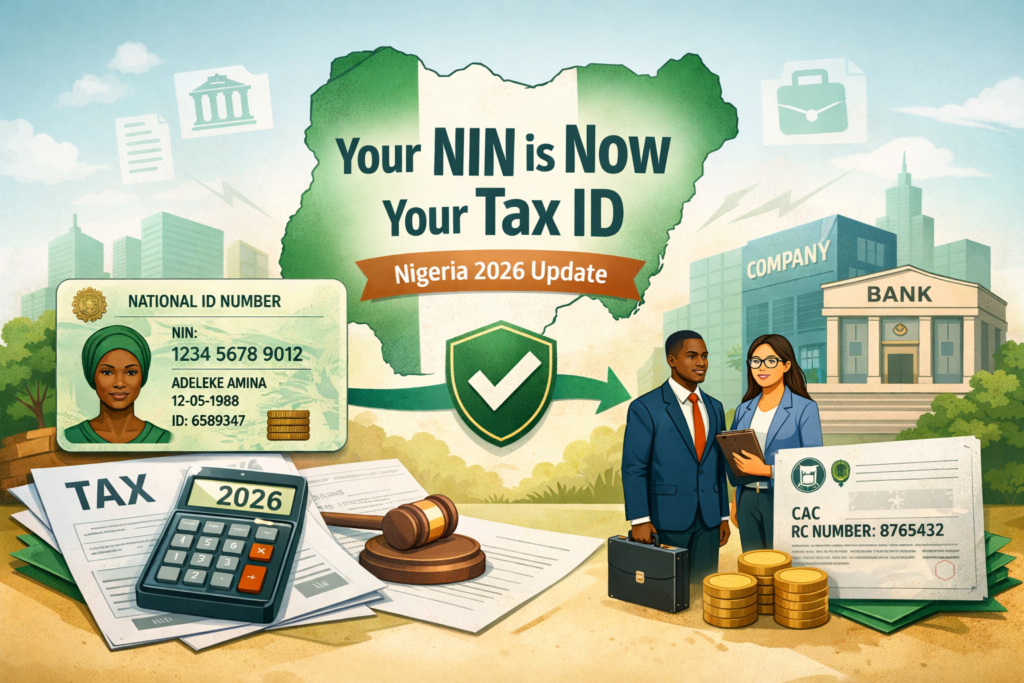

Nigeria’s tax system officially changed from 1 January 2026, and there has been a lot of confusion online about what the new law really says.
This post explains Nigeria’s 2026 tax reform in simple terms, who it applies to, what has changed, and what has not changed, so you can stay compliant without fear or misinformation.
What Is the Nigeria 2026 Tax Reform About?
The Nigerian government restructured the tax system to:
- Reduce confusion caused by multiple overlapping tax laws
- Combine many existing tax laws into a clearer framework
- Protect low-income earners
- Support small businesses
- Improve transparency and compliance
This reform did not introduce “new daily taxes” or automatic bank alert deductions, as widely rumored online.
Who Does This Tax Law Apply To?
The 2026 tax law applies to anyone earning income from Nigeria, including:
- Salary earners
- Freelancers and self-employed individuals
- Traders and online sellers
- Business owners (Business Name & Limited Companies)
- Professionals (lawyers, consultants, accountants, IT providers)
- Digital and online businesses
- Foreigners earning income from Nigeria
If income is earned from Nigeria, this law applies.
Need help registering or filing your taxes?
Talk to a Tax Expert for Free
Who Collects Taxes in Nigeria Now?
Two tax authorities still exist and now work more closely:
Nigeria Revenue Service (NRS)
Handles:
- Company Income Tax
- VAT
- Federal-level taxes
- Large business taxes
State Internal Revenue Services (SIRS)
Handles:
- Personal Income Tax
- PAYE (salary earners)
- Self-employed individuals
What Is a Tax ID Under the New Law?
Your Tax Identification depends on who you are:
- Individuals: Your NIN is your Tax ID
- Businesses & Companies: Your CAC RC or BN number is your Tax ID
👉 Registration is required even if tax payable is ₦0.
Personal Income Tax (Very Important for Individuals)
Who Is an Individual?
- Salary earners
- Freelancers
- Online sellers
- Traders
- Sole proprietors (business name owners)
Tax-Free Income Threshold
If your annual income is ₦800,000 or less, you pay ₦0 personal income tax.
That is:
- ₦66,667 per month × 12 = ₦800,000
You may still need to register and file, but no tax is payable.
Personal Income Tax Rates(2026)
| Annual Income | Tax Rate |
|---|---|
| ₦0 – ₦800,000 | 0% |
| ₦800,001 – ₦3,000,000 | 15% |
| ₦3,000,001 – ₦12,000,000 | 18% |
| ₦12,000,001 – ₦25,000,000 | 21% |
| ₦25,000,001 – ₦50,000,000 | 23% |
| Above ₦50,000,000 | 25% |
Example (Simple):
If you earn ₦2 million per year:
- First ₦800,000 → 0% = ₦0
- Remaining ₦1,200,000 × 15% = ₦180,000
✅ Total tax = ₦180,000
✅ Take-home income = ₦1,820,000

Salary Earners (PAYE)
- Your employer deducts tax monthly
- Pension and approved deductions reduce your tax
- If you earn below ₦66,667 monthly → PAYE = ₦0
- Always confirm your employer remits PAYE properly
Companies Income Tax (Limited Companies)
Small Company Relief
A company pays 0% company income tax if:
- Turnover is ₦50 million or less, AND
- Assets are ₦250 million or less
But the company must still:
- Register
- File annual returns
Other Companies
- Company income tax = 30% of profit
Ready to stay compliant and avoid penalties?
Get expert help with CAC registration, tax filings, VAT, and NIN verification — all in one place.
👉 Get Started with Taxify (Free Consultation)
VAT Explained Simply
- VAT rate = 7.5%
- VAT is not your money
- VAT is collected on behalf of the government
VAT Registration Threshold
- Below ₦25 million turnover → No VAT registration
- Above ₦25 million → Must register and charge VAT
Common VAT Myths (Not True)
❌ Government deducts VAT daily
❌ VAT is taken from bank alerts
❌ Output VAT is business income
✅ VAT is only charged on taxable supplies
✅ VAT is remitted monthly
✅ VAT belongs to the government, not the business
Nigeria’s 2026 tax reform is designed to:
- Protect low-income earners
- Support small businesses
- Simplify compliance
- Reduce misinformation and fear
If it is not written in the law, it is not the law.
NEED HELP WITH REGISTRATION OR TAX COMPLIANCE?
At Taxify, we help individuals and businesses handle:
- NIN & Tax ID activation
- CAC registration & post-incorporation
- VAT, PAYE, WHT filings
- Annual returns & tax clearance
- End-to-end compliance support
👉 You can talk to an expert for free before taking any step.